
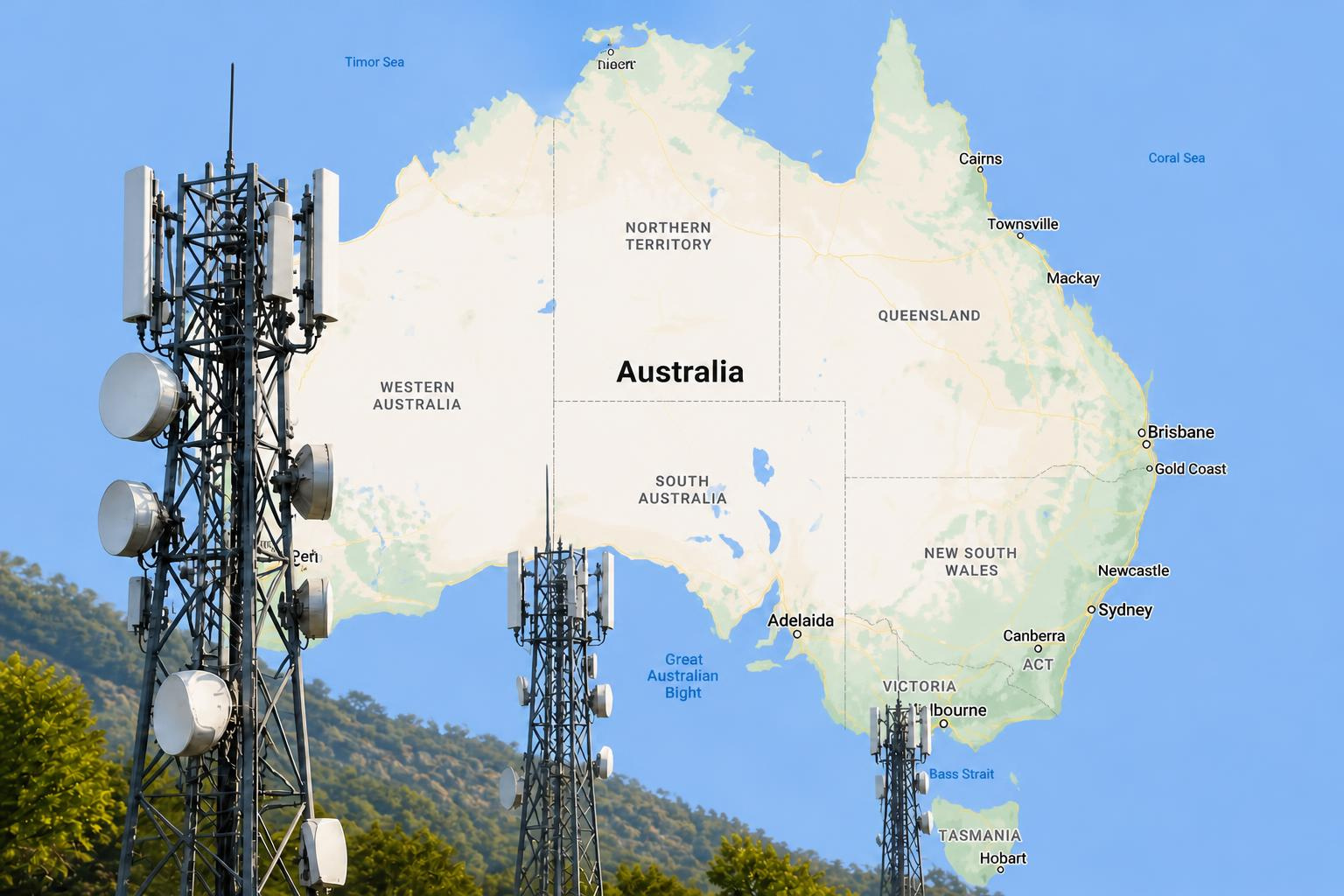
Introducing the WISPAU Coverage Map: Finding Internet Choice Beyond the NBN and Satellite
For a lot of Australians, especially outside major metro areas, checking for internet options usually means one of two things: typing an address into the NBN checker and hoping for the best, or defaulting to Satellite or Starlink because it’s the option everyone’s heard of. Both are reasonable starting points — but neither is the full picture.
What often gets missed is that NBN and satellite aren’t the only ways to get connected. Right across the country, independent Wireless Internet Service Providers (WISPs) are running their own fixed wireless networks — towers on hills, water tanks, silos, and rooftops beaming a signal to homes and businesses that might otherwise have no real choice at all. The problem has never really been availability. It’s been visibility: there’s been no easy way to see who’s actually operating near you.
That’s what the new WISPAU coverage map is for.
What the map actually does
Available now at wispau.au/wisp-map, the coverage map plots WISPAU’s member providers across Australia, town by town, tower by tower. Instead of scrolling through directories or asking around on local Facebook groups, you can:
- Search by suburb or postcode and see which WISPs have coverage nearby, with an adjustable radius so you can widen or narrow the search
- View each provider’s listing — phone number, email, TIO membership status, and carrier licence details, so you know who you’re dealing with before you call
- Click through to a provider’s own website to check plans, pricing, and whether they can service your specific address
It’s a genuinely practical starting point for anyone whose NBN options are limited, slow, or nonexistent — a share house on the edge of town, a rural property waiting years for an upgrade, or someone who just wants a second option to compare against.
Why a coverage map matters
Fixed wireless from an independent provider isn’t a fallback — for a lot of regional and semi-rural premises, it’s often the fastest, most reliable option available, sometimes outperforming what NBN can offer to the same address. And compared to LEO satellite services like Starlink, a local WISP connection typically comes with lower latency (useful for video calls, gaming, and anything real-time), no satellite dish or line-of-sight-to-sky requirements, and support from a provider who’s actually local and contactable — rather than a global call centre. Starlink has genuinely changed what’s possible for the most remote properties in Australia, and for some premises it’s still the only realistic option. But for anyone within reach of a WISP tower, it’s rarely the only one, and it’s often not the best value once you compare plans side by side.
None of this is about ruling NBN or Starlink out — for plenty of premises they’re the right call, and sometimes the only one. It’s about making sure they aren’t the only options anyone ever hears about. But that only helps if people know the alternative exists.
A single, searchable map does three things a scattered collection of individual provider websites can’t:
- It puts every member WISP in one place, so someone comparing options doesn’t have to know which providers even exist in their area before they can start comparing them.
- It signals legitimacy. A listing that shows TIO membership and carrier licence details gives people a quick, honest way to check they’re dealing with a real, accountable provider — something that matters when the WISP industry is still less well known than the big telcos.
- It supports genuine choice, not just availability. Even where NBN technically reaches a property, or Starlink is sitting there as the easy default, having a visible local alternative means competition on price, service, and support — which is good for everyone, including the WISPs themselves.
Why it matters for WISPAU members specifically
If you’re a member WISP, the map is only as useful as the data behind it — which means keeping your listed coverage locations accurate is worth the ten minutes it takes.
A few reasons it’s worth staying on top of:
- Every tower you add is a lead you’d otherwise miss. A prospective customer searching their suburb only sees you if your coverage locations are actually listed and current. An outdated or missing tower is a missed enquiry.
- Accurate radius and coverage details cut down wasted enquiries. Listing your real coverage areas — rather than an optimistic guess — means the people who do contact you are more likely to be genuinely serviceable, saving both sides time.
- It’s a trust signal for your own brand, not just WISPAU’s. A complete, well-maintained listing (logo, contact details, TIO status, a clear description of the areas and speeds you offer) reflects on how professional your business looks to a first-time visitor.
You can embed the map on your own website too
One detail worth highlighting: the coverage map isn’t locked to wispau.au. It’s built to be embedded directly into a member’s own website via a simple iframe, filtered to show just your own coverage — so your own “Coverage Area” page can show live, accurate tower locations without you having to maintain a second map yourself.
That means:
- No duplicate data entry — update your listing once with WISPAU, and it reflects everywhere it’s embedded
- A professional, interactive coverage view on your own site, rather than a static image or a vague “check your address” text box
- One less thing to maintain, since the underlying map and its features are kept up to date centrally
If you’re a WISPAU member interested in embedding your coverage map, or you need a hand getting your listing details up to date, reach out to the WISPAU team — it’s a small update that can make a real difference to how easily customers find you.
Try it now
Head to wispau.au/wisp-map and search your own address.
If you’re a consumer currently on NBN or Starlink and wondering if there’s something better nearby, it might turn up an option you didn’t know existed. If you’re a WISP, it’s worth checking your own listing is accurate — because somewhere right now, someone in your coverage area is comparing their options and running that same search.