Telstra’s Nationwide Outage Is a Reminder: Know Your Outage Obligations
Yesterday’s nationwide Telstra outage was a stark reminder of just how disruptive a network failure can be — and how closely regulators, media, and customers are now watching how telcos respond.
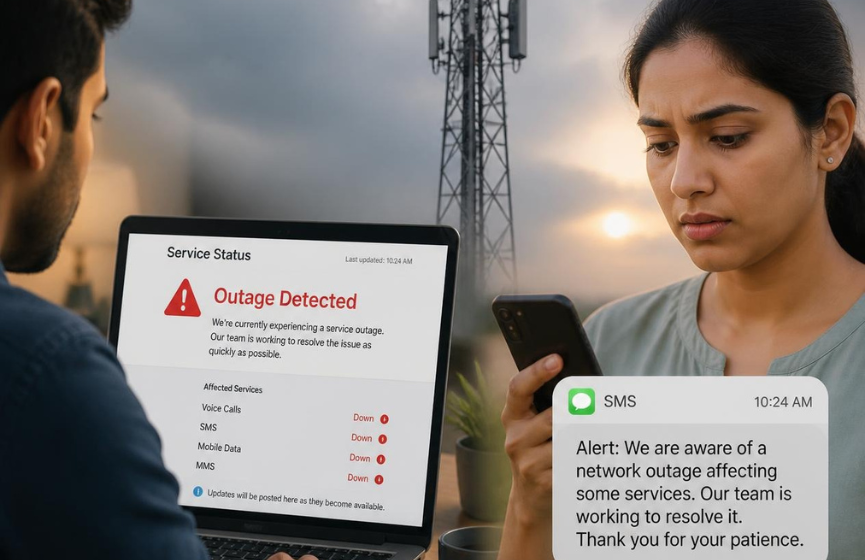
On 8 July 2026, Telstra’s mobile network was hit by a widespread fault. Millions of Australians lost mobile calls and data access, EFTPOS and merchant payment terminals dropped out, regional and V/Line train services were suspended as a safety precaution, and — most seriously — some Triple Zero calls failed to connect, triggering welfare checks across the country.
Telstra reported the issue as largely resolved by the afternoon, but the fallout is far from over: the ACMA has confirmed a full investigation, the newly established Triple Zero Custodian is separately reviewing the emergency-call impacts, and commentary since has focused heavily on whether telcos are meeting their communication obligations during outages — with one industry expert publicly describing a competitor’s earlier outage-page performance as non-compliant.
It’s a timely reminder for every telco in the country, WISPs included: the rules for how you communicate during a major or significant local outage are not optional, and the goalposts have moved over the past 18 months.
The Obligations Haven’t Stood Still
Since the Telecommunications (Customer Communications for Outages) Industry Standard 2024 first came into effect, the regulatory picture has expanded well beyond “put a notice on your website.” If your outage falls within the defined thresholds — broadly, 100,000+ services (or a full state/territory) for a major outage, or 1,000+ services in regional areas for 6+ hours (250+ in remote areas for 3+ hours) for a significant local outage — you now have obligations across several fronts:
- Direct and public customer communication, as soon as practicable, with updates at least every 6 hours for the first 24 hours and every 24 hours after that.
- Content requirements — customers should be told the geographic area affected, the likely cause (where known), the services impacted, and an estimated restoration time.
- Real-time or near-real-time assistance for customers needing urgent help during the outage.
- Notification to other carriers and CSPs you have commercial arrangements with, and to regulators and stakeholders where required.
- A documented Network Outage Complaints Handling process, in force since 30 June 2025, setting out how complaints during an outage are accepted, investigated, and resolved.
- A public register of resolved outages — this one is easy to miss, and it is now a live obligation. Since 30 June 2026, all telcos must publish (or link to) a register of resolved major and significant local outages, covering every outage resolved on or after 31 March 2026.
- Emergency call impact reporting, where an outage affects Triple Zero call delivery — including sharing real-time network information with the relevant emergency call persons and regulators.
None of this scales down for smaller providers. If your network meets the thresholds, the obligations apply regardless of whether you’re running a handful of towers or a national mobile network — as this week’s events make clear, the ACMA and the public are paying close attention to how telcos of all sizes handle these moments.
Action Item: Check Your Outage Register Is Live
Of everything above, the outage register is the one most likely to have slipped under the radar, simply because it’s new. Take five minutes this week to check:
- Do you have a public register of resolved major and significant local outages published or linked from your website?
- Does it cover outages resolved since 31 March 2026?
- Does each entry include when the outage started, when services were restored, the geographic areas affected, and the type of outage?
If the answer to any of these is no, this is the moment to fix it — before it’s a regulator asking the question instead of us.
Don’t Build Your Policy From Scratch
To help members get this right, WISPAU has a Major and Significant Local Outage policy template available for download in the members section.
It’s built around the current ACMA requirements — thresholds, notification content, natural disaster provisions, complaints handling, the outage register, and emergency call impact reporting — so you can adapt it to your own network rather than starting from a blank page.
If you haven’t reviewed your outage policy since the register requirement came into force, now’s the time. Log in to the members area, grab the template, and make sure your outage register is live and ready before it’s tested for real.